
Death of a pregnant woman due to lack of medical care in Baghaichhari, the pathetic state of the health system in the hilly region
Baghaichhari (Rangamati) Correspondent:
The death of 27-year-old Santwana Chakma due to medical crisis and mismanagement in Baghaichhari upazila of Rangamati has once again brought to the fore the weakness of the health sector in the hilly region. The untimely death of this young woman from Marishya Pakowakhali village is not just a family's grief, but a painful reflection of the long-standing health crisis.
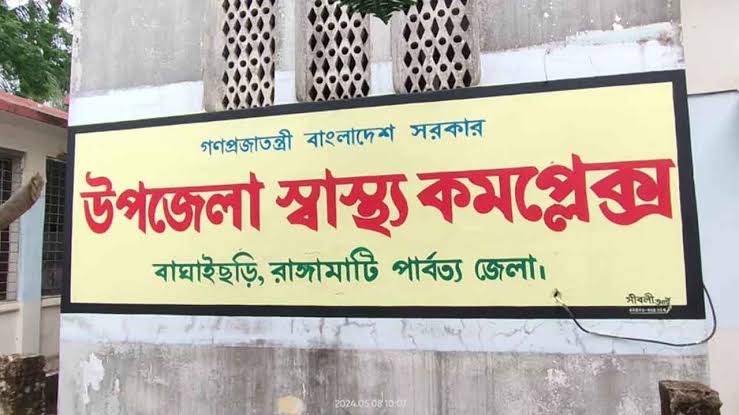
When labor pains began on Monday (September 22) morning, her relatives took her to the Baghaichhari Upazila Health Complex. But since there were no necessary obstetricians and modern services there, the doctor on duty advised her to be sent to Khagrachari Sadar Hospital immediately. She gave birth in the car on the way, about two to three hours away. Her condition deteriorated rapidly due to excessive bleeding and she died before reaching the hospital.
Although there are approved doctor posts in the Upazila Health Complex, most of them have been vacant for a long time. Due to excessive pressure on those who are there, it is not possible to provide quality services. There is a severe shortage of skilled doctors and specialists, especially in obstetrics, pediatrics, and emergency medicine. As a result, patients in critical conditions do not receive timely treatment.
The hospital does not have modern labs, ICUs, or adequate equipment. There is also a shortage of essential medicines and fast-moving ambulances. Due to the remote mountainous area, the communication system is also weak, resulting in time wasted in sending emergency patients to the district headquarters or big cities, which is becoming one of the main causes of loss of life.
Union-level hospitals and sub-health centers are practically ineffective. Due to manpower shortage and lack of equipment, it is not possible to provide primary healthcare locally. This is becoming a terrible problem for people living in poor and remote areas.
The cost of treatment is also beyond the reach of the poor. From minor ailments to major surgeries—they have to travel to Khagrachari or Chittagong for everything. Travel costs, risks, and time—all together make the path to saving lives more difficult. Pregnant women, children, and the elderly are especially at risk.
A local resident said, “It is our responsibility to protect the life of every mother. However, due to the lack of healthcare here, that safety cannot be ensured.”
They demand that specialist doctors be appointed for rapid obstetrics, child and emergency services. At the same time, modern labs, ICUs, diagnostic facilities and sufficient ambulances should be provided. They have also strongly demanded the development of rapid communication systems in remote areas, keeping hospitals operational at the union level and establishing regional medical colleges and modern hospitals in the hilly regions in the long term.
Santwana Chakma’s death is not just a family’s grief; it is a tragic reflection of the long-term health crisis in the hilly region. If necessary steps are not taken now due to the weakness of the medical, infrastructure and communication systems, many more families will fall victim to similar tragic incidents in the future.
Copyright @ 2025 EN-JUGANTOR PRATIDIN
 প্রিন্ট করুন
 সেভ করুন